How to Make a Revision Timetable for GCSE & A-Level

Written by
Corey CrossFounder & Computer Science Teacher
Corey is a qualified Computer Science teacher (QTS) who still teaches GCSE Computer Science and OCR Level 2 IT every week. He founded Revision Genie and writes the platform himself.
Why Do You Need a Revision Timetable?
Creating a revision timetable is essential for staying organised during your GCSE or A-Level exam preparation. It helps you manage your time effectively, ensures you cover all topics, and reduces last-minute cramming.
With a well-thought-out plan, you can balance your study time with breaks, ensuring you remain productive without feeling overwhelmed.
Steps to Create the Perfect Revision Timetable
1. Assess Your Exam Dates
Start by listing all your exam dates in chronological order. Knowing your deadlines will help you prioritise subjects that need immediate attention.
Tip: Use a calendar or diary to mark your exam dates clearly.
2. List All Subjects and Topics
Break down each subject into individual topics. For example, if you're revising GCSE Maths, include topics like Algebra, Geometry, and Statistics. This ensures no area is overlooked.
- GCSE Example: Biology - Cells, Photosynthesis, Respiration
- A-Level Example: History - The Cold War, The Tudors
3. Calculate Your Available Time
Figure out how many hours you can realistically dedicate to revision each day. Consider your school schedule, extracurricular activities, and downtime.
Tip: Aim for 2-3 hours of revision daily for GCSEs and 3-4 hours for A-Levels, spaced out in chunks.
4. Prioritise Topics Based on Importance
Focus more time on areas you find challenging or topics with higher weight in exams. Use past papers to identify frequently tested areas.
5. Create a Weekly Template
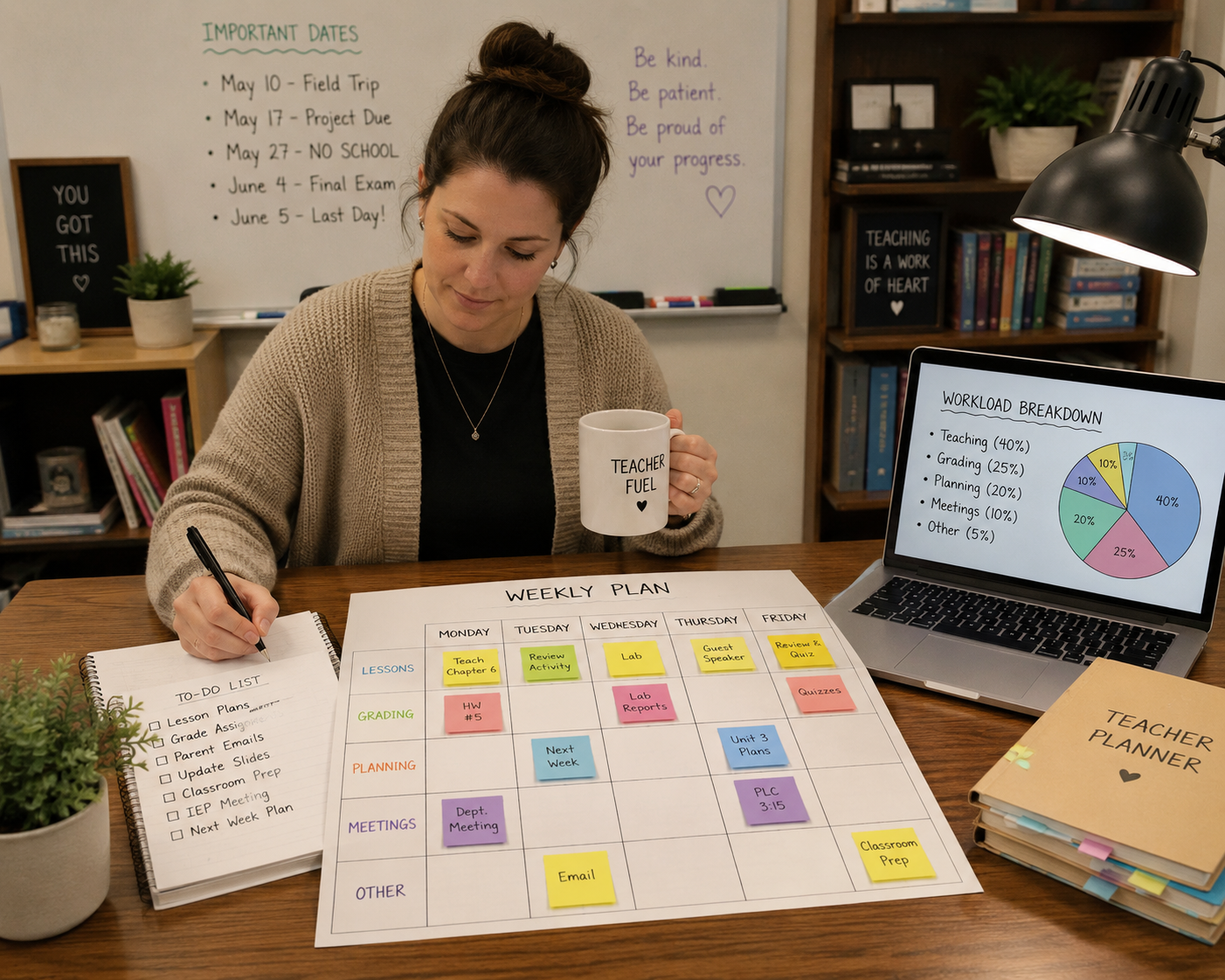
Design a timetable that allocates specific subjects and topics to days of the week. Here's an example:
| Day | Subject | Topics | Time |
|---|---|---|---|
| Monday | Maths | Algebra & Geometry | 5:00-6:30 PM |
| Tuesday | English Literature | Poetry Analysis | 4:00-5:30 PM |
Practice Exercise: Build Your Own Revision Timetable
Download or sketch out a blank weekly planner. Follow these steps:
- Mark your exam dates.
- Allocate time slots for each subject.
- Write down specific topics for each session.
- Include short breaks and time for relaxation.
For a ready-made template, check out [LINK:/revision-timetable-template].
Tips for Sticking to Your Timetable
- Be realistic: Don’t over-schedule. Leave room for flexibility.
- Set goals: Start each session with a clear objective, like completing a past paper or mastering a topic.
- Reward yourself: After completing a session, take a break or treat yourself.
- Track progress: Tick off completed topics to stay motivated.
Exam Technique Tips
Effective revision isn’t just about memorising; it’s about practising exam techniques.
- Use past papers: Familiarise yourself with question formats and mark schemes.
- Time yourself: Simulate exam conditions to improve your speed and accuracy.
- Review mistakes: Analyse where you went wrong and revise those areas.
For more guidance, explore our expert-led lessons at [LINK:/lessons].
Conclusion
Creating and following a revision timetable can drastically improve your performance in GCSE and A-Level exams. Start planning early, stay consistent, and adapt the timetable as needed.
If you need personalised support, our AI tutors at RevisionGenie are here to help. Visit [LINK:/genies] to learn more.
About the author

Written by
Corey CrossFounder & Computer Science Teacher
Corey is a qualified Computer Science teacher (QTS) who still teaches GCSE Computer Science and OCR Level 2 IT every week. He founded Revision Genie and writes the platform himself.
- Qualified Teacher Status (QTS)
- Currently teaching GCSE Computer Science and Level 2 IT (OCR)
- 4 years' classroom teaching experience
- Degree in Web Design & Development, University of Hull